

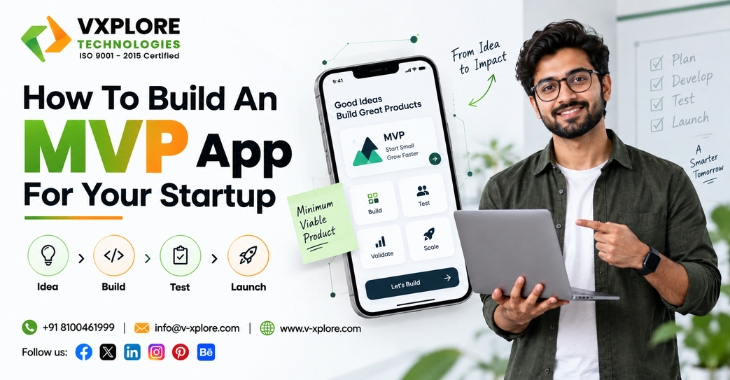
Building a startup app can be exciting, but developing a complete product with every possible feature is not always the best way to begin. Startups often have limited budgets, limited development time, and many assumptions about what users actually need.
An MVP, or Minimum Viable Product, helps startups launch a simplified version of their idea with core features. Businesses looking for a Mobile App Development Company In India can use an MVP approach to test their concept before investing heavily in a larger application.
What Is an MVP App?
An MVP is the first functional version of an application. It includes the essential features required to solve the main problem for users. Instead of building every feature immediately, the startup focuses on delivering the core value of the product. The purpose is to learn from real users and use their feedback to guide future development.
Start With the Problem You Want to Solve
Every successful MVP should begin with a clear problem. Ask yourself what challenge your application will solve and why users would choose your solution. For example, a food delivery startup may focus initially on connecting customers with local restaurants instead of building advanced loyalty programs, complex analytics, and multiple additional services. A clear problem helps determine which features are essential.
Define Your Target Users
Before building an MVP, identify who will use the application. Understanding your target audience can help you make better decisions about design, functionality, and user experience. Consider factors such as user needs, common challenges, digital habits, and expectations. You do not need to build an app for everyone. An MVP is often more effective when it focuses on a specific group of users first.
Identify the Core Features
Feature overload is one of the most common startup mistakes. Create a list of all the features you would eventually like to include, then identify which ones are absolutely necessary for the first version. Ask one important question: Can the app still solve its main problem without this feature? If the answer is yes, that feature may be better suited for a future update.
Focus on Value First
Your MVP should provide enough functionality for users to understand the value of your product. The goal is not to create the smallest app possible. The goal is to create the simplest version that can deliver the core solution effectively.
Research Your Competitors
Competitor research can help you understand the existing market. Look at how similar applications solve the problem and identify areas where users may have different needs or expectations. However, avoid copying every feature from competing applications. Your MVP should focus on the unique value your startup wants to provide.
Choose the Right Development Approach
The technology and development approach should match your business requirements. Depending on your goals, you may choose to develop a native Android application, an iOS application, or a cross-platform solution. An experienced Android App Development Company India can help evaluate which approach makes sense based on your target audience, budget, required features, and future growth plans. The right technology decision can also make future development and maintenance easier.
Create a Simple User Journey
A good MVP should be easy to understand. Map out the steps a user takes from opening the application to completing the main action.
For example, an eCommerce MVP may include:
- Browse products.
- View product details.
- Add items to the cart.
- Complete the purchase.
Avoid adding unnecessary steps that could make the experience confusing.
Build a Prototype Before Development
A prototype can help visualize how the application will work before full development begins. Wireframes and user interface designs can help identify usability issues early. This can reduce unnecessary development changes and make communication easier between startup founders, designers, and developers. Testing a prototype with potential users can also provide useful feedback before major development resources are invested.
Develop the MVP in Phases
Breaking the project into smaller phases can make the development process easier to manage. Start with the most important functionality. Once the core features are working, additional improvements can be added based on testing and user feedback. This approach allows the startup to maintain focus and avoid continuously expanding the project scope.
Test Before Launching
An MVP should be simple, but it still needs to work properly. Test the application’s important functions, user experience, performance, and compatibility before release. Issues with login, payments, navigation, notifications, or other essential features can create a negative first impression. A reliable App Development Company India can help establish a structured testing process before the application reaches users.
Launch and Collect Real User Feedback
The MVP launch is the beginning of the learning process. Once real users start interacting with the application, you can collect feedback about what they like, what they find difficult, and which features they want. User feedback can help validate your assumptions. Instead of guessing what should be developed next, you can use actual user behavior to guide future product decisions.
Measure the Right Results
After launch, identify the metrics that are most relevant to your startup. Depending on the app, this may include user registrations, active users, retention, feature usage, conversion rates, or customer feedback. Avoid focusing only on download numbers. An application with many downloads but poor engagement may reveal that users are not finding enough value in the product.
Improve the App Based on Feedback
The purpose of an MVP is to learn and improve. Some features may need refinement, while others may not be necessary. Continue developing the application based on evidence from users and the business. This can help startups invest development resources in areas that provide real value.
Plan for Scalability
Although an MVP is a simplified version of the final product, the underlying technology should support future growth. The application may eventually need to handle more users, more data, additional features, and integrations. Planning for reasonable scalability from the beginning can reduce the need for major redevelopment later.
Keep Your Budget Under Control
Startups should carefully manage development costs. An MVP helps control spending by focusing on the features needed for initial validation. Create a clear development scope and prioritize essential functionality. Additional features can be scheduled for later phases when there is stronger evidence that users need them.
Why Choose Vxplore Technologies for Startup App Development?
Vxplore Technologies helps startups approach app development with a structured process focused on business goals, user requirements, and future growth.
From identifying essential features to planning development and preparing for future updates, a professional approach can help reduce unnecessary complexity during the MVP stage. For startups in West Bengal, India, working with an experienced development team can make it easier to transform an initial idea into a functional product.
Frequently Asked Questions
MVP stands for Minimum Viable Product. It is the first functional version of an app that includes the core features needed to provide value to users.
An MVP can help startups test their idea with real users before investing heavily in additional features and development.
An MVP should include only the features necessary to solve the application’s main problem. The exact number depends on the product.
The right choice depends on your target audience, business goals, budget, and market requirements.
Yes. Additional features can be developed after gathering feedback and understanding how users interact with the application.
Real user feedback can help validate assumptions and identify which improvements or features should be prioritized.
Yes. Although an MVP has fewer features, its essential functionality should be properly tested before launch.
Focus on essential features, define a clear project scope, avoid unnecessary complexity, and plan additional features for future phases.
Yes, if reasonable scalability is considered during planning and development. The application can be expanded as user and business requirements grow.
Vxplore Technologies can help startups plan, design, develop, test, and improve an MVP based on their business requirements and long-term goals.
Final Thoughts
Building an MVP app is about focusing on what matters most. Start with a clear problem, understand your users, prioritize essential features, test the product, and learn from real feedback. A successful MVP does not need every feature from the beginning. It needs to provide enough value to help you understand whether your idea solves a genuine user problem.
If you are looking for a Mobile App Development Company In India, choosing a team that understands MVP development can help your startup launch more efficiently and make better decisions about future growth.

